




Mild Steel Angle Iron Grades: Which One Should You Choose?
5 Dec 2025




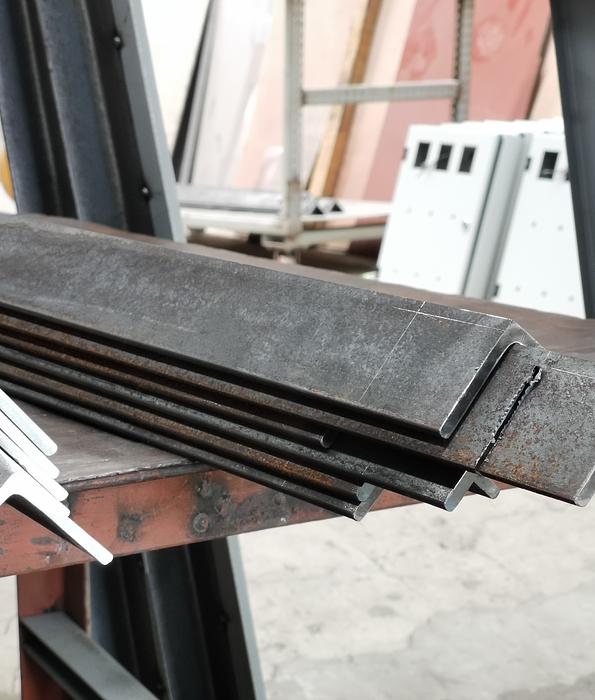
When it comes to choosing angle iron, most people focus on size first. Leg length, thickness and overall dimensions tend to get all the attention, while grade is often overlooked. In reality, the grade of mild steel angle iron plays a big part in how strong it is, how it behaves when welded and whether it’s suitable for certain jobs.
Across UK fabrication and construction, angle iron grade is typically chosen alongside section size and thickness, rather than in isolation. This guide breaks down the most common mild steel angle iron grades and explains how to choose the right one without over-specifying or wasting money.
1
What “grade” means in mild steel angle iron
In simple terms, the grade of steel tells you how strong it is and how much stress it can take before it starts to permanently deform. Mild steel angle iron in the UK is typically supplied under S-grades, such as S235, S275 and S355.
The number refers to the steel’s specified minimum yield strength, measured in megapascals. A higher number means the steel can handle more force before it bends. What it doesn’t mean is that the steel will automatically perform better in every situation. Grade affects strength, but it doesn’t change the shape, size or basic workability of the angle iron.
For many everyday applications, the differences between grades aren’t obvious at a glance, which is why understanding when grade matters is so important.
2
The most common mild steel angle iron grades
S235: when the lowest grade is enough
S235 is the lowest commonly used structural grade of mild steel. It’s easy to work with, welds well and is often used for light fabrication, brackets and non-load-bearing structures.
For indoor projects or decorative metalwork, S235 is often more than adequate. It’s also a popular choice when cost is a key factor and high strength isn’t required. Where it falls short is in heavier structural applications, longer spans or situations where the angle iron will be under constant load.
S275: the most common all-rounder
S275 is widely regarded as the standard choice for general fabrication. It offers a noticeable step up in strength compared to S235 while remaining easy to weld and machine.
This grade is commonly used for frames, supports, gates, shelving systems and general construction work. It strikes a good balance between strength, availability and price, which is why it’s so widely stocked by suppliers. For most DIY and trade projects, S275 is the safest default choice when no specific structural requirements apply.
S355: higher strength for demanding applications
S355 is a higher-strength mild steel grade designed for more demanding structural applications. It’s used where higher loads, longer spans or stricter engineering requirements are involved.
While S355 offers increased strength, it isn’t always necessary. It can be slightly more expensive and, in some cases, overkill for smaller projects. Unless the design specifically calls for it or the loads justify it, many fabricators prefer to stick with S275 and adjust size or thickness instead.
3
Angle iron grade vs thickness: which impacts strength more?
This is where many people get caught out. While grade does affect strength, thickness often has a bigger impact on how angle iron performs in real-world use.
A thicker angle iron is generally stiffer and more resistant to bending than a thinner one, even if the thinner option is a higher grade. For example, a thicker S275 angle can often outperform a thinner S355 angle in applications like shelving or frames where rigidity matters more than ultimate yield strength.
Increasing thickness also reduces flex over longer spans, which is a common cause of failure in lighter sections. In many cases, upgrading thickness is a more practical and cost-effective solution than upgrading grade.
Grade tends to matter most in structural or engineered applications where loads are precisely calculated. For everyday fabrication, thickness is often the first thing to adjust.
4
Choosing the right combination of grade, size and thickness
The best choice depends on how and where the angle iron will be used. Light-duty indoor projects rarely need more than S235 or S275 with moderate thickness. Outdoor projects benefit from a sensible combination of grade, thickness and protective finish rather than strength alone.
For load-bearing or structural work, grade becomes more important, but it should still be considered alongside section size and thickness. Welded assemblies also benefit from common grades that behave predictably under heat.
Thinking about grade, size and thickness together leads to better results than focusing on one factor in isolation.
5
Weldability and fabrication considerations
All common mild steel angle iron grades weld well, but higher grades can be slightly less forgiving if heat input isn’t controlled. For most fabricators, S275 offers the best balance of strength and weldability.
Using widely available grades also makes fabrication easier when replacements or modifications are needed later. Mixing grades unnecessarily can complicate welding and quality control without offering real benefits.
6
Common mistakes when choosing angle iron grade
One of the most common mistakes is over-specifying the grade when it isn’t needed. Stronger steel sounds better, but it doesn’t always improve performance in practice. Another mistake is ignoring thickness and assuming grade alone will solve strength issues.
It’s also worth noting that galvanising or coating angle iron doesn’t change its grade. The underlying steel remains the same, so strength calculations should always be based on the original grade and dimensions.
7
How to check what grade you’re buying
Reputable suppliers will clearly state the grade in the product description. For structural work, mill test certificates can confirm material properties, though they’re often unnecessary for general projects.
Sticking to common grades from reliable suppliers reduces the risk of confusion and ensures consistency across a project. At The Metal Store, we stock S275 mild steel angle iron in thicknesses from 3mm to 10mm. You can choose from a range of sizes in your chosen thickness with free cutting to get the exact length you need.
Choosing the right grade with confidence
Choosing the right mild steel angle iron grade doesn’t need to be complicated. For most jobs, S275 offers the best all-round performance, with thickness playing a major role in strength and rigidity. By matching grade and thickness to the demands of the project, you can avoid over-engineering while still achieving a strong, reliable result.
If S275 is right for your project, you can order mild steel angle iron today from The Metal Store. As well as free cutting, you’ll benefit from bulk discounts on large orders and fast delivery across the UK.