

Pop & Lock: Your Guide to System Scaffolding

4 minutes read

23 Mar 2026

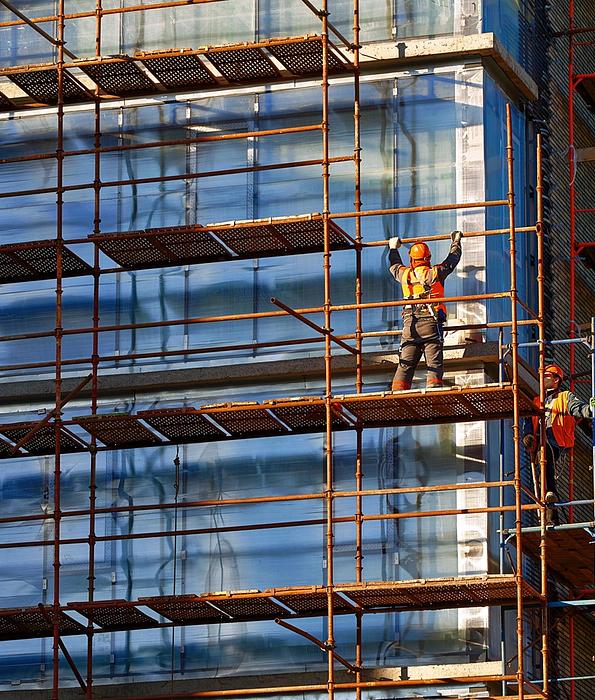
If you’ve ever watched a scaffold go up in record time, chances are you were looking at system scaffolding.

No endless measuring. No guesswork with couplers. Just slot, lock and move on.

Often called modular scaffolding, system scaffolding is built for speed, consistency and repeatable jobs. But, it’s not always the right answer for every site. In many situations, particularly refurbishment work or irregular structures, traditional tube and fitting scaffolding is still the more adaptable solution.

In this guide, we’ll break down what the characteristics of system scaffolding are, how it works, where it shines and when you might be better off sticking with traditional methods.

No fluff. No marketing waffle. Just the facts.

Note: As with any scaffold structure in the UK, installation should follow recognised guidance such as TG20 and SG4 to ensure safe design, erection and use.

Article in Brief

System scaffolding uses pre-engineered components that slot and lock into place.

Its key characteristics are speed, consistency and repeatability.

It’s ideal for large, regular structures like commercial builds and long façades.

But it’s also less flexible than traditional tube and fitting scaffolding for awkward or one-off layouts.

Popular systems include Ringlock, Cuplock and Kwikstage.

It still needs correct bracing, load awareness and competent erection to stay safe.

1

What is system scaffolding?

System scaffolding is a prefabricated scaffolding system made from standardised components with fixed connection points. Instead of joining tubes together with couplers, the components are designed to connect in one specific way, quickly and consistently.

Most systems use vertical standards with built-in rosettes or cups at set intervals. Horizontal ledgers and transoms simply slot into these points and lock in place. Hence the name: pop & lock.

Because everything is engineered to fit together, the scaffold goes up faster, looks more uniform and behaves more predictably once it’s built.

2

What are the characteristics of system scaffolding?

Let’s get straight to it. What are the characteristics of system scaffolding that make it different from traditional tube and fitting?

1. Pre-set connection points


System scaffolding standards have fixed connection points at regular intervals. This removes the need for on-the-spot measuring and reduces the risk of human error.

Result:

  • Faster builds
  • Consistent lift heights
  • Fewer “that’ll do” moments

2. Speed of assembly and dismantling


This is the big one. System scaffolding is designed to go up (and come down) quickly.

Because the components slot straight in, you get:

  • Fewer loose fittings
  • Less time spent adjusting
  • Easier training for crews

On large or repetitive jobs, this can save serious time (and money).

3. Consistency across large structures


System scaffolding excels when the layout is regular and repeatable.

Long façades, identical bays, multi-storey commercial builds: this is where it earns its keep. Every lift looks the same. Every bay behaves the same.

That consistency also helps with inspections and safety checks.

4. High load capacity


System scaffolding is engineered with known load ratings. When used correctly, it offers excellent load-bearing performance. That’s ideal for jobs where materials need to be stored on the scaffold as well as people working on it.

That said, load limits still apply. “Engineered” doesn’t mean “indestructible”.

5. Cleaner, more organised structures


Because there are fewer random connections and adjustments, system scaffolds tend to look tidier and more structured.

That’s not just cosmetic. It helps with:

  • Safer access routes
  • Clearer working platforms
  • Easier compliance checks

3

Common types of system scaffolding

You’ll hear a few names thrown around on-site. While they all fall under the system scaffolding umbrella, they use slightly different connection methods.

Ringlock scaffolding


One of the most common systems around.

  • Uses rosettes welded to the standards
  • Ledgers and braces slot in and lock with a wedge
  • Allows multiple connections at one point (usually up to eight)

Good for: Complex but repetitive layouts, commercial builds and industrial sites.

Cuplock scaffolding


An older but still widely used system.

  • Uses a cup-and-blade locking mechanism
  • Horizontals are secured by rotating a top cup downwards

Good for: Heavy-duty applications and straightforward and large-scale scaffolds.

Kwikstage scaffolding


Very common in the UK.

  • Uses a wedge-style connection
  • Known for fast erection and strong load performance

Good for: General construction, housing developments and commercial projects.

Each system has its own components, but the core principle stays the same: pre-engineered parts that lock together quickly.

4

System scaffolding vs tube and fitting

This is where debates usually start. Truth is, neither system is “better”. They’re better at different things.

Where system scaffolding wins

  • Large, regular structures
  • Repetitive layouts
  • Jobs where speed matters
  • Sites with multiple crews rotating in and out

Where tube and fitting still rules

  • Awkward shapes
  • Extensions, chimneys, bay windows
  • Tight access and one-off builds
  • Jobs that evolve mid-project

Tube and fitting gives you maximum flexibility using scaffold tube and scaffold fittings. System scaffolding gives you speed and consistency. It’s simply a case of choosing the one that suits the job best.

5

Is system scaffolding safer?

It can be, but only when it’s used properly.

Because system scaffolding is consistent and engineered, it reduces some common errors like incorrect spacing or missing components. But it doesn’t remove the need for:

  • Correct bracing
  • Proper ties
  • Guardrails and toe boards
  • Safe access routes
  • Regular inspections

A badly erected system scaffold is still a badly erected scaffold.

Platforms still need proper scaffold boards or system decking, base conditions still matter and load limits still exist. There are no shortcuts, just fewer excuses.

6

When should you choose system scaffolding?

System scaffolding makes sense when:

  • The structure is large and predictable
  • Speed of erection is critical
  • Multiple lifts and bays are required
  • The design won’t change much mid-job

If you’re scaffolding a straightforward commercial block or a long run of new-build housing, system scaffolding is often the most efficient option.

If the site is awkward, tight, or constantly changing? Tube and fitting may save you more headaches in the long run.

Get the right scaffolding supplies, whatever system you use

  Whether you’re running a full system scaffold or mixing in traditional elements, having reliable materials matters. At The Metal Store, we supply essential scaffolding components, all delivered fast, cut to size and without the usual hassle.

  With TMS Express Delivery, unlimited free cutting and bulk discounts available, we keep things simple, so you can get on with the job.

  No fuss. No waiting around. Just metal made easy.
Related articles

If you’re not sure what you need,
then we’re just a call away
01274 875479