




What Are the Different Types of Scaffolding?
6 minutes read
16 Feb 2026




Scaffolding isn’t complicated… until you’re the one stood there trying to figure out what you actually need.
Article in Brief
The three main scaffold types are supported scaffolds (built up from the ground), suspended scaffolds (hung from above) and mobile scaffolds (towers you can move).
Supported scaffolds cover most building work and split into tube and fitting (most flexible) and system scaffolding (fast to build, consistent).
Suspended scaffolds are best for high-rise maintenance and bridge work where you can’t build from the ground.
Mobile towers are ideal for short-duration jobs like painting and M&E work, but they’re not designed to replace full scaffold structures where materials, loading or large working platforms are required.
Whatever the type use a stable base, the correct ties/bracing, safe platforms and never exceed load limits.
The three main scaffold types (the simple way)
- Supported scaffolding (built from the ground up)
- Suspended scaffolding (hung from above)
- Mobile scaffolding (moveable towers)
1) Supported scaffolding
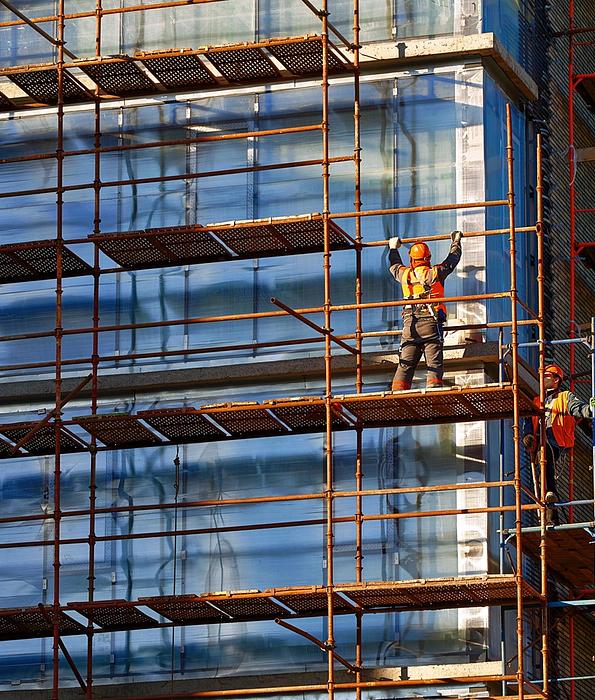
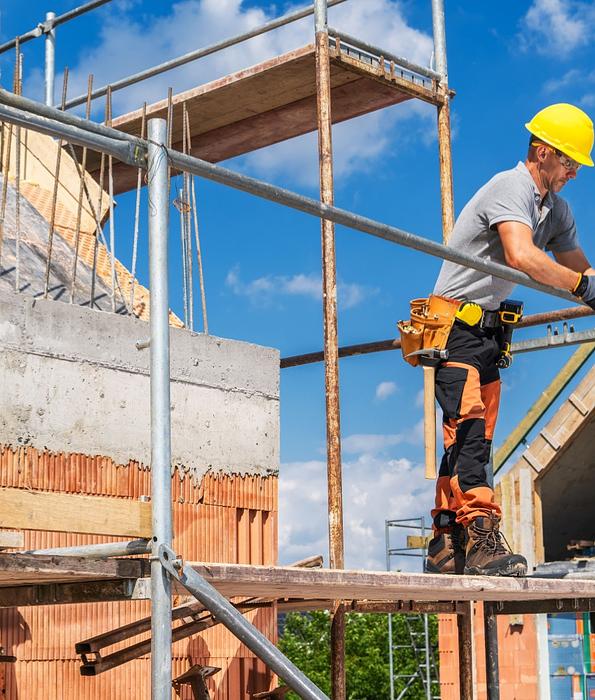
Supported scaffolding is the classic setup. It’s a structure built from the ground using standards (verticals), ledgers (horizontals), transoms, braces and platforms. It’s what you’ll see on housing jobs, commercial builds, refurbs, the lot.
Tube and fitting scaffolding
This is the “old faithful” of the scaffolding world. It’s built using scaffold tube plus couplers/fittings to connect everything together.
- Maximum flexibility (awkward shapes, chimneys, bays, extensions, around obstacles)
- Strong, adaptable and great for bespoke builds
- Easy to extend or modify mid-job (because the job always changes mid-job)
- Domestic scaffolds with odd angles
- Complex façades
- Industrial sites with pipework and obstacles
System (modular) scaffolding
System scaffolding uses pre-engineered components with fixed connection points (think Ringlock, Cuplock, Kwikstage and similar systems).
- Fast to erect and dismantle
- Consistent connections and repeatable builds
- Great for large projects and repetitive layouts
- Big commercial jobs
- Long straight runs
- Sites where speed and consistency matter
Common supported scaffold variations (built from the same basics)
These are still supported scaffolds, just configured differently:
- Single (bricklayer’s) scaffolding: One row of standards, often used on brickwork jobs.
- Double scaffolding: Stronger arrangement typically used where you can’t rely on the wall in the same way.
- Cantilever scaffolding: When the ground below can’t take standards (access issues, fragile surfaces, narrow pavements).
- Trestle scaffolding: Low-level interior work (think decorating).
2) Suspended scaffolding
Suspended scaffolding is exactly what it sounds like: a working platform hung from above, rather than supported from the ground.
- High-rise window cleaning and façade maintenance
- Bridge inspection and repair
- Work over water, traffic, rail lines, atriums or fragile roofs
- You can access areas where it’s impractical (or impossible) to build a scaffold from the ground.
- You reduce ground-level obstruction (useful in busy public areas).
- Typically lower load capacity than a full supported scaffold
- More moving parts (winches, suspension systems, anchorage points)
- Requires tight controls and competent installation
3) Mobile scaffolding (scaffold towers)
Mobile scaffolding covers scaffold towers and similar access systems designed to be moved (usually on castors). This is the choice for a lot of indoor work, maintenance, fit-outs and quick access jobs.
Common uses:
- Painting and decorating
- M&E installs (lights, ducting, cabling)
- Warehouse maintenance
- Shopfitting and refurb work
Why people like towers:
- Quick to set up (when used properly)
- Easy to reposition
- Great for short-duration tasks
What to watch for:
- Towers need a flat, stable base (stairs and slopes are where people try to get clever. It’s not worth the risk)
- Outriggers/stabilisers often aren’t optional if you want to keep it upright
- Don’t drag a tower while someone’s still on it (yes, people do this)
Other scaffolding types you’ll hear about (and where they fit)
- Birdcage scaffolding: A supported scaffold used indoors for ceiling work (lots of standards in a grid).
- Rolling scaffolds: A type of mobile scaffold, usually lower height, for indoor use.
- Confined space scaffolding: Often tube and fitting, built to suit restricted access areas.
- Temporary roofs: A supported scaffold setup designed to protect the job from the weather.
How to choose the right scaffold type for your job
- Do you need heavy-duty access and material storage? Go supported (tube & fitting or system), with proper ties and loading considerations.
- Can’t build from the ground (traffic/water/obstructions)? Look at suspended scaffolding.
- Short job, moving around a lot, mostly tools not materials? A mobile scaffold tower is usually the better shout.
- Use proper platforms and edge protection
- Keep within load limits
- Make sure it’s erected and inspected by someone competent
- Don’t “make it work” with bits of timber and optimism
Get the scaffolding gear you need (without the faff)
Whether you’re building a full supported scaffold or just replacing parts, having the right kit matters. At The Metal Store, you can get essentials like scaffolding tube, scaffolding fittings and scaffolding boards delivered to your door. All fast and without the usual hassle.
Need it quickly? We offer TMS Express Delivery on loads of products. Want tubes cut to suit your job? We offer unlimited free cutting on metal orders. And if you’re planning ahead, you can pick your delivery date.
Get the scaffolding supplies you need, when you need it. No mess, no stress. Just metal made easy.