




How Mild Steel Round Bar Is Made: Hot Rolling, Cold Drawing & Mill Finish Explained
2 Jan 2026




Ever wondered why some mild steel round bars are shiny and smooth, while others are darker and rougher? It’s all down to how they’re made.
Article in Brief
Mild steel round bar starts life as a steel billet, heated and shaped into a solid circular section.
The two main production methods are hot rolling and cold drawing, which create “black” and “bright” finishes.
“Mill finish” refers to the natural surface left from the rolling process
Hot rolled bar is strong and cost-effective. Cold drawn bar is smoother and more precise.
From billet to bar: how it all begins
Related: Furnace to Forge: How Steel Is Made
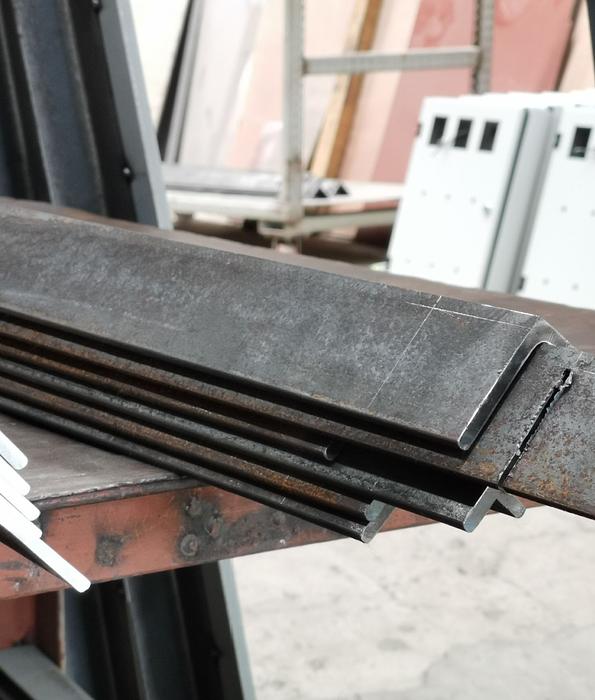
Hot rolled round bar (black bar)
How it’s made
Once the steel billet is heated, it’s passed through a series of rollers that squeeze it into its final circular shape. After rolling, the bar is cooled naturally in air and cut into standard lengths.
Properties and uses
Hot rolled bar is:
- Tough and durable.
- Ideal for welding and fabrication.
- Slightly less precise in size than cold drawn bar (but perfectly fine for most structural work).
- Structural steelwork.
- Fabrication projects.
- Brackets, frames and reinforcements.
- Jobs where strength matters more than appearance.
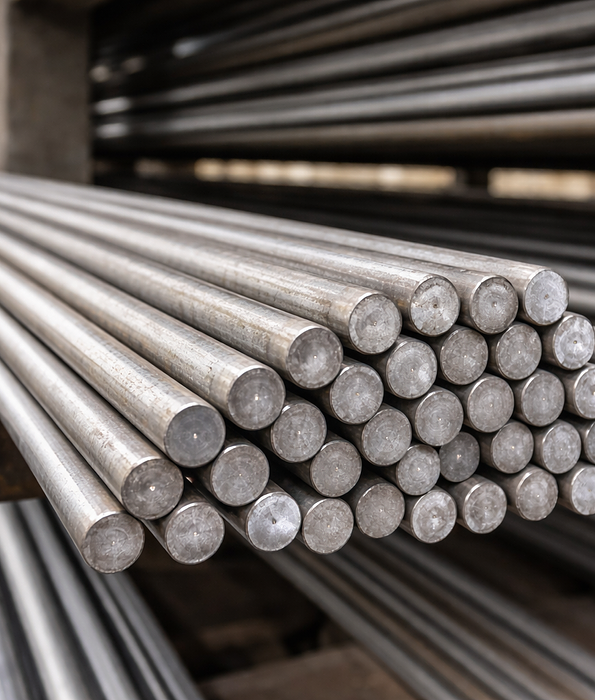
Cold drawn round bar (bright bar)
How it’s made
This cold drawing process pulls the steel through precise dies. It’s like squeezing toothpaste through a smaller nozzle. This reduces its diameter slightly and improves its surface quality.
Properties and uses
Bright bar is:
- Smooth and visually clean.
- Dimensionally precise, with tight tolerances.
- Slightly stronger due to work hardening during drawing.
- Precision engineering.
- Machined components and turned parts.
- Shafts, pins, axles and tooling.
- Decorative or visible installations.
Mill finish explained
Bright vs black bar: what’s the difference?
| Feature | Hot Rolled (Black Bar) | Cold Drawn (Bright Bar) |
|---|---|---|
| Process | Rolled at high temperature | Drawn through dies at room temperature |
| Surface finish | Rough, dark (mill scale) | Smooth, bright, clean |
| Tolerance | Standard (per BS EN 10060) | Tight, suitable for precision machining |
| Strength | Good | Slightly higher (work hardened) |
| Cost | Lower | Higher |
| Best for | Fabrication, structural work | Machining, engineering components |
Why manufacturing method affects size and tolerance
Choosing the right type for your project
- Go black (hot rolled) for fabrication, welding and heavy structural work.
- Go bright (cold drawn) for machining, turning or applications where exact size and finish are key.
Stock and supply at The Metal Store
We supply a full range of mild steel round bars in both hot rolled (black) and cold drawn (bright) finishes. Whatever the size, we’ll cut it to your exact length free of charge, pack it carefully and deliver it straight to your door, anywhere in the UK. Browse our full range or call our team on 01274 875 479 for expert advice.
FAQs
What’s the difference between hot rolled and cold drawn mild steel round bar?
Hot rolled bar is shaped at high temperatures and has a darker, rougher surface. Cold drawn (bright) bar is pulled through dies at room temperature, giving it a smoother, more precise finish.
Why is it called “black bar”?
Because of the dark mill scale that forms on the surface during hot rolling. It’s completely normal and can be removed if needed for painting or coating.
What does “mill finish” mean?
It’s the natural surface of the bar straight from the rolling mill. Unpolished, uncoated and untreated. It’s ideal for fabrication and welding jobs where surface appearance isn’t critical.
Is bright bar stronger than black bar?
Yes, slightly. The cold drawing process work-hardens the steel, improving its tensile strength and straightness. But for most applications, both are equally durable.
Why does bright bar cost more than black bar?
Because it goes through extra processing, drawn through dies for tighter tolerances and smoother finish. This adds time and precision to the manufacturing process.
Can I weld both black and bright mild steel round bar?
Absolutely. Both can be welded easily. Just make sure to remove any mill scale from black bar first to get a clean, strong weld.
Which type of bar should I use for machining or turning?
Go for bright bar. Its smooth surface and accurate diameter make it ideal for machining, threading and precision components.