



Mild Steel Round Bar Sizes Explained: Diameter, Length & Applications
9 Jan 2026




When it comes to buying mild steel round bar, size really does matter. Knowing what you need can make all the difference, whether you’re fabricating machinery, repairing kit or building something from the ground up.
Article in Brief
Mild steel round bar is a strong, versatile material used in fabrication, construction and engineering.
The two main size variables are diameter and length, which affect how the bar performs in different projects.
Other key factors like tolerance, weight, finish and grade also impact precision and performance.
What is a mild steel round bar?
The main sizing variables
Diameter
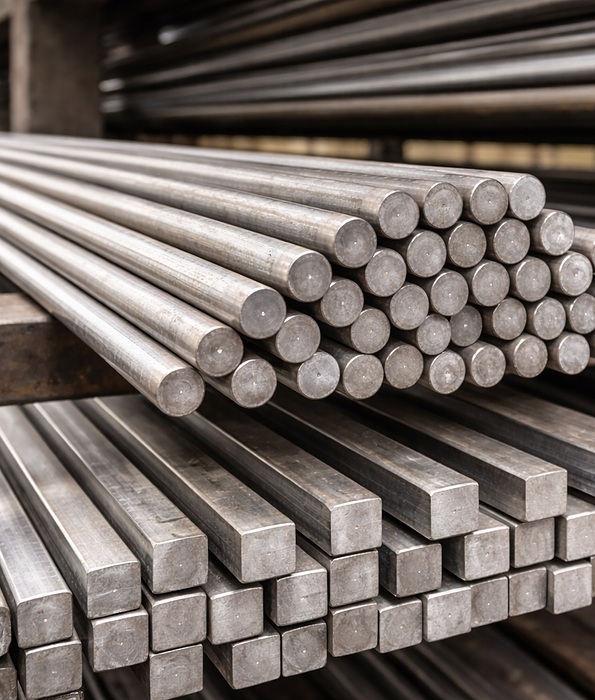
The first number to check when ordering is diameter. It’s the width of the bar, measured in millimetres (mm). Typical diameters range from 6mm right up to 100mm+, depending on what you’re building.
- Smaller diameters (6mm-20mm): Ideal for light fabrication, model making, supports and repair jobs.
- Mid-range (25mm-50mm): Great for shafts, frames and general manufacturing.
- Larger diameters (above 50mm): Perfect for heavy-duty engineering or load-bearing applications.
Length
Mild steel round bar usually comes in standard lengths of 3 metres or 6 metres, but you don’t have to stick to that.
Other key factors to think about
Tolerances
If you’re working to tight specifications, precision matters. Round bars are produced to strict tolerances set out in BS EN 10060, which governs dimensions, roundness and straightness.
Weight
Knowing the weight per metre helps when calculating load limits, delivery weights or project costs.
10mm | 0.62kg
20mm | 2.47kg
40mm | 9.86kg
60mm | 22.2kg
80mm | 39.4kg
Weights shown are approximate and based on standard mild steel density.
Finish
Mild steel round bar is available in two main finishes:
- Black (hot rolled): Slightly rough surface, perfect for welding, fabrication and general structural work.
- Bright (cold drawn): Smooth, shiny and more precise. Ideal for machining, turning or applications where appearance matters.
Grades
The two most common mild steel grades for round bar are:
- EN1A: Easy to machine, ideal for turned parts, threads and general engineering.
- EN3B: Stronger and more versatile, suitable for welding and structural use.
Applications
You’ll find mild steel round bar used just about everywhere:
- Construction: Rebar, supports, braces and fixings.
- Manufacturing: Shafts, axles, machine parts.
- Automotive: Steering components, brackets and tooling.
- General fabrication: Frames, gates, jigs and fixtures.
- DIY & repairs: Small projects, workshop use or hobby engineering.
Stock and customisation
We stock a huge range of diameters and lengths, ready to go from our UK warehouses.
Why buy from The Metal Store?
We’ve been making metal simple since 2011. Whatever the size or scale of your project, you’ll get unlimited free cutting and fast delivery within 1-3 days.
That’s why tradespeople, makers and big businesses alike trust The Metal Store for their steel supplies.
Browse our full range of mild steel round bars or give us a call on 01274 875 479 to talk to our team.
FAQs
How do I measure mild steel round bar size?
Measure across the centre of the bar. That’s your diameter. Most round bars are specified by diameter in millimetres (mm), not by radius or circumference.
What’s the difference between diameter and thickness?
Thickness applies to sheet or hollow products like tube. For solid bar, we only talk about diameter. That’s the full width across the circular section.
What size round bar should I use for my project?
It depends on the job. Smaller diameters (6-20mm) work well for lightweight frames or decorative use, while larger sizes (50mm+) are best for load-bearing or structural applications.
What tolerances apply to mild steel round bar?
Mild steel round bars are produced to BS EN 10060, which sets limits on diameter and straightness. If you need exact precision for machining, bright bar offers a tighter tolerance than black bar.
Does bar length affect strength or performance?
Not directly. Strength comes mainly from the diameter and grade. But longer bars can flex or bend more easily under load, so cutting to a shorter length can improve rigidity.
What’s the difference between black and bright bar?
Black bar is hot-rolled and rougher, better for fabrication. Bright bar is cold-drawn and smoother, ideal for precision machining.