

Scaffolding for Stairways: The Safest Ways to Work on Stairs

4 minutes read

2 Feb 2026

Working on stairs is awkward at the best of times. Tight spaces. Uneven steps. Nowhere decent to put your feet. Yet painting, plastering, electrics and installs still need doing. Usually at height and usually over hard surfaces too.

And this is where people often reach for a ladder. Big mistake.

When it comes to scaffolding for stairways, your main concern is avoiding falling down those stairs rather than overengineering the job. 

This guide covers the safest ways professionals work over staircases, what equipment actually works and what to avoid.

Article in Brief

Stairs aren’t a safe base for ladders. Uneven footing and overreaching is how falls happen.

Scaffolding for stairways gives you a level platform on steps, so you can work hands-free and stable.

Use a staircase scaffold tower or a properly designed scaffold platform for longer jobs (decorating, plastering, electrics) and higher stairwells.

Use a stair podium for short, low-height tasks (lights, fittings, quick installs).

Don’t bodge standard towers onto stairs. If it’s not stair-rated, it’s not worth the risk.

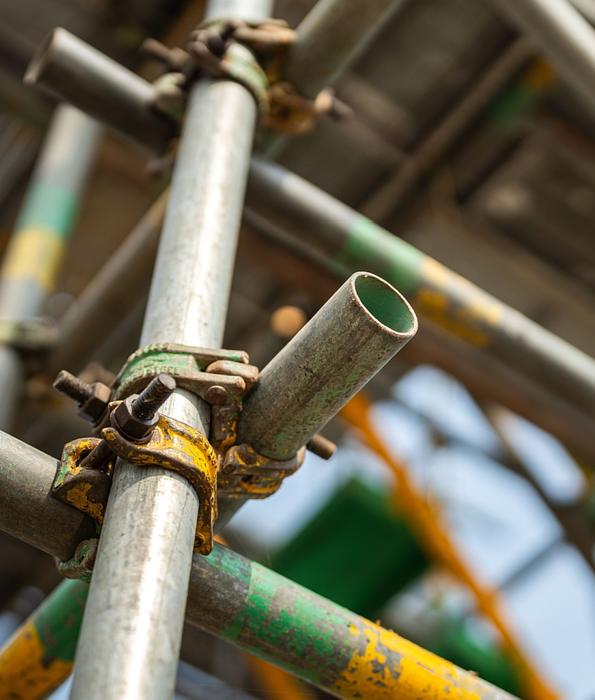
On refurbishment or more complex projects, safe working platforms can also be created using traditional scaffold components such as scaffold tube, scaffold fittings and scaffold boards.

1

Why working on stairs is risky (and ladders make it worse)

Stairs are a nightmare for access work. Each step is a different height, the working area is narrow and there’s rarely a flat surface anywhere near where you need to be. Add tools, materials and overreaching, and things can go wrong fast.

Ladders are often used because they’re “quick”. But on stairs, they’re unstable, uncomfortable and easy to misuse. One foot slips, the ladder shifts or you lean too far. Suddenly the job’s stopped for all the wrong reasons.

If you’re working at height on stairs for more than five minutes, a ladder isn’t the solution. A stable platform is.

2

What is scaffolding for stairways?

Scaffolding for stairways is access equipment specifically designed to sit safely on stairs, not flat ground. Unlike standard scaffold towers, stairway systems allow for uneven heights, meaning one end of the structure can sit lower than the other without compromising stability.

In some cases, particularly on refurbishment projects or irregular layouts, contractors may instead build temporary platforms using traditional tube and fitting scaffolding to achieve a safe, level working area.

The result? A level working platform over a staircase. No balancing act.

These systems give you a proper deck to stand on, space to move and guardrails to stop you going where you shouldn’t. In short, they’re built for working, not just getting up and down.

3

Types of scaffolding for stairways

Not all stair jobs are the same. The safest option depends on what you’re doing, how high you’re working and how long you’ll be there.

Staircase scaffold towers


A staircase scaffold tower is one of the main options for stairway work. It’s a freestanding structure with adjustable legs that account for the rise and fall of steps, allowing the platform to stay level.

Best for:

  • Painting or decorating stairwells
  • Plastering or patching walls and ceilings
  • Electrical installs and lighting
  • Multi-storey staircases

Why they work:

  • Long platform = less repositioning
  • Stable, hands-free working
  • Safer for longer jobs

If you’re tackling a full stairwell or anything above ground-floor height, this is the safest and most professional choice.

Stair scaffold podiums


A stair scaffold podium is a smaller, more compact option. It still provides a platform, but with a lower working height and less room to move.

Best for:

  • Changing light fittings
  • Hanging mirrors or signs
  • Short, low-level tasks

The trade-off:

  • Smaller platform
  • More frequent repositioning

They’re ideal for quick jobs where a full tower would be overkill. But they’re not built for all-day decorating. Podiums and access platforms can be found alongside other access equipment.

Tube and fitting platforms over stairwells


On refurbishment or more complex projects, contractors often build temporary working platforms over staircases using traditional scaffold components.

This typically involves:

These platforms can be adapted to suit awkward layouts and irregular staircases, making them a practical solution where off-the-shelf access equipment isn’t suitable.

What not to use on stairs


Standard scaffold towers aren’t designed for staircases. Forcing one onto steps using blocks, wedges or “it’ll be fine” logic is asking for trouble.

If the equipment isn’t made for stairs, don’t use it on stairs. Simple as that.

4

Can you use scaffolding on stairs safely?

Yes, if it’s designed for the job.

Safe stairway scaffolding should always include:

  • Adjustable or stepped legs to handle uneven ground
  • A level working platform
  • Guardrails and toe boards
  • A clearly defined working load limit

The structure should be erected properly, inspected before use and kept clear of clutter. Overloading platforms or leaning out beyond guardrails defeats the whole point.

Additionally, in the UK, scaffold structures should follow recognised guidance (such as TG20 and SG4) to ensure safe design and use.

If it feels sketchy, it probably is.

5

Stairway scaffolding vs ladders: no contest

Let’s be blunt; ladders are for access, not working.

Here’s why scaffolding wins every time:

  • Platform vs rung: Standing flat beats balancing on a narrow rung
  • Stability: Towers don’t shift every time you move
  • Comfort: Less fatigue means fewer mistakes
  • Productivity: You can actually get on with the job

Trying to work sideways on a ladder over stairs isn’t brave. It’s risky. Platforms exist for a reason.

6

Choosing the right stairway scaffold for your job

Before you choose, ask yourself:

  • How high is the stairwell?
  • How long will the job take?
  • Do you need to move along the wall or ceiling?

Quick job at low height? A podium might do.

Full stairwell, longer task or multiple trades? A staircase scaffold tower or properly designed scaffold platform is the safer bet.

If in doubt, go with the option that gives you more space and more stability. You’ll thank yourself later.

Work smarter (and safer) on stairs

  Stairs don’t have to be dangerous. But cutting corners makes them that way. With the right scaffolding for stairways, you get a stable platform, safer access and a setup that actually lets you work properly.

  At The Metal Store, we supply scaffolding and access equipment built for real jobs. No faff, no shortcuts. If you’re looking for reliable scaffolding supplies, fast delivery and kit that does what it’s supposed to do, you’re in the right place.

  Get the right setup. Get the job done. And keep both feet where they belong.
Related articles

If you’re not sure what you need,
then we’re just a call away
01274 875479