

Weight Capacity of a Scaffold Component: UK Guide

5 minutes read

3 Mar 2026

Scaffolding isn’t something you “roughly” load and hope for the best.

Whether you’re stacking bricks, storing blocks or just carrying out inspection work, knowing the weight capacity of a scaffold component is essential. Get it wrong and you’re risking collapse, injury, site shutdowns and serious legal trouble.

In the UK, scaffold load capacity is defined under recognised guidance, with clear load classes that tell you exactly what a scaffold platform can handle.

Let’s break it down properly. No waffle. No confusion.

Article in Brief

The weight capacity of a scaffold component is determined by its load class.

In the UK, scaffold load classes typically range from Class 1 to Class 6, although Classes 1–4 are most commonly used on general construction projects.

Load capacity is measured in kN/m² (kilonewtons per square metre).

Different types of work require different load classes.

Overloading scaffolding is dangerous and avoidable.

Always check the scaffold’s load rating before starting work.

1

What do we mean by “weight capacity of a scaffold component”?

When people talk about the weight capacity of a scaffold component, they’re usually referring to the maximum load a scaffold platform can safely carry. In practice, this relates to the overall working platform rather than a single individual component.

That load is measured as a distributed load per square metre (not just one heavy object dumped in the middle).

It’s also important to understand that scaffolding works as a system. You’ve got:

Each part has its own limits. But the overall load class of the scaffold determines what the full working platform can safely support.

2

UK scaffold load classes explained

In the UK, tube and fitting scaffolding is covered by NASC guidance (TG20). It defines a range of load classes, with Classes 1–4 being the most commonly used in practice. Below, we'll through each one in plain English.

Broadly speaking, the higher the class, the greater the weight capacity of a scaffold component. But only if it’s designed and erected correctly.

Class 1 – Very light duty (0.75 kN/m²)


Designed for inspection and access work only.

No material storage. No heavy tools. Just people carrying out checks or minor tasks.

Class 2 – Light duty (1.5 kN/m²)


Suitable for light tasks like painting or cleaning.

Still no stacking of bricks or heavy materials on the platform.

Class 3 – General purpose (2.0 kN/m²)


This is the common one for construction.

Suitable for bricklaying and general building work, where materials are present but not heavily stockpiled.

Class 4 – Heavy duty (3.0 kN/m²)


Used for heavier masonry, cladding and situations where materials are stored on the scaffold.

If you’re stacking blocks or heavier loads, this is where you need to be looking.

3

What does kN/m² actually mean?

Kilonewtons per square metre sounds technical, but it’s just a way of measuring force spread over an area. Very roughly speaking, 1 kN equates to approximately 100kg of force. So, 2.0 kN/m² is roughly 200kg spread evenly across one square metre.

The key phrase there is spread evenly. If you pile all your bricks into one tight stack in a single corner, that’s a point load. And that’s a completely different story.

Scaffold load classes assume distributed loads. Concentrated loads need separate consideration.

In short, spread it out. Don’t stack it like you’re building a pyramid.

4

Does every scaffold component have the same weight capacity?

No. And this is where people get caught out.

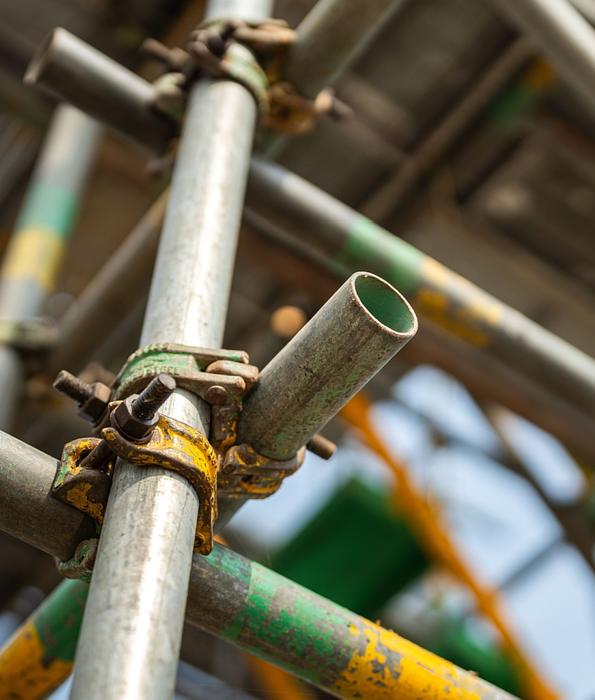
Individual scaffold components have their own limits:

  • Scaffold boards have maximum spans and load ratings.
  • Scaffold tubes have bending limits.
  • Couplers have slip resistance ratings.
  • Base jacks have vertical load capacities.

But the platform’s overall load class depends on the scaffold design as a whole.

Mix the wrong boards with the wrong spacing. Use worn fittings. Or over-extend spans. Suddenly your real-world capacity is lower than you think.

If you’re sourcing materials, make sure they’re fit for purpose. Quality matters. Consistency matters. Guesswork doesn’t.

5

What happens if you exceed the weight capacity?

Short answer? It creates serious safety risks.

Overloading scaffolding can lead to:

  • Excessive deflection (bouncy, sagging platforms)
  • Coupler slippage
  • Tube bending
  • Board failure
  • Progressive structural collapse

And that’s before we even mention:

  • HSE investigations
  • Site shutdowns
  • Insurance issues
  • Criminal liability

Scaffolding failure doesn’t usually give you much warning. When it goes, it goes. Knowing the weight capacity of a scaffold component (and sticking to it) is basic site safety.

6

How to make sure your scaffold is safe

Here’s how to stay on the right side of safe.

1. Confirm the required load class before work starts


Don’t just “assume” it’s fine. Match the scaffold to the task.

2. Follow TG20 guidance


Ensure the scaffold is compliant with TG20 guidance and relevant UK standards.

3. Use a competent scaffolder


Design and erection matter as much as the materials.

4. Don’t store materials unless the scaffold is rated for it


If it’s Class 2, don’t treat it like Class 4.

5. Inspect regularly


Especially after bad weather or heavy use. See ‘How Often Should Scaffolding be Inspected?’.

6. Don’t quietly increase the load


Adding “just a few more packs” is how overloads happen.

Scaffolding is predictable when used properly. It’s unpredictable when abused.

7

Key takeaway: don’t guess the load

If there’s one clear message here, it’s that the weight capacity of a scaffold component in the UK is defined, classified and regulated.

From Class 1 to Class 4, each has a purpose and each has a limit.

Your job is simple. Match the scaffold to the task. Don’t overload it. And use the right components.

Above all, safety on site is about knowing your numbers and sticking to them.

Choosing the right scaffold components

  Strong scaffolding starts with solid materials. Galvanised steel tube resists corrosion. Reliable fittings hold firm under load. Properly graded boards reduce deflection. And stable base jacks keep everything level.

  If you’re putting a system together, make sure every part is up to the job.

  At The Metal Store, we supply scaffold components cut, delivered and ready to use. No messing about. That includes scaffold tubes, fittings, boards and base jacks.

  Because when it comes to the weight capacity of a scaffold component, the weakest part decides the limit.

  Browse our full range of scaffolding supplies today and get what you need, without the hassle.
Related articles

If you’re not sure what you need,
then we’re just a call away
01274 875479